AI agents in business operations: what works in 2026, and what to leave for 2027
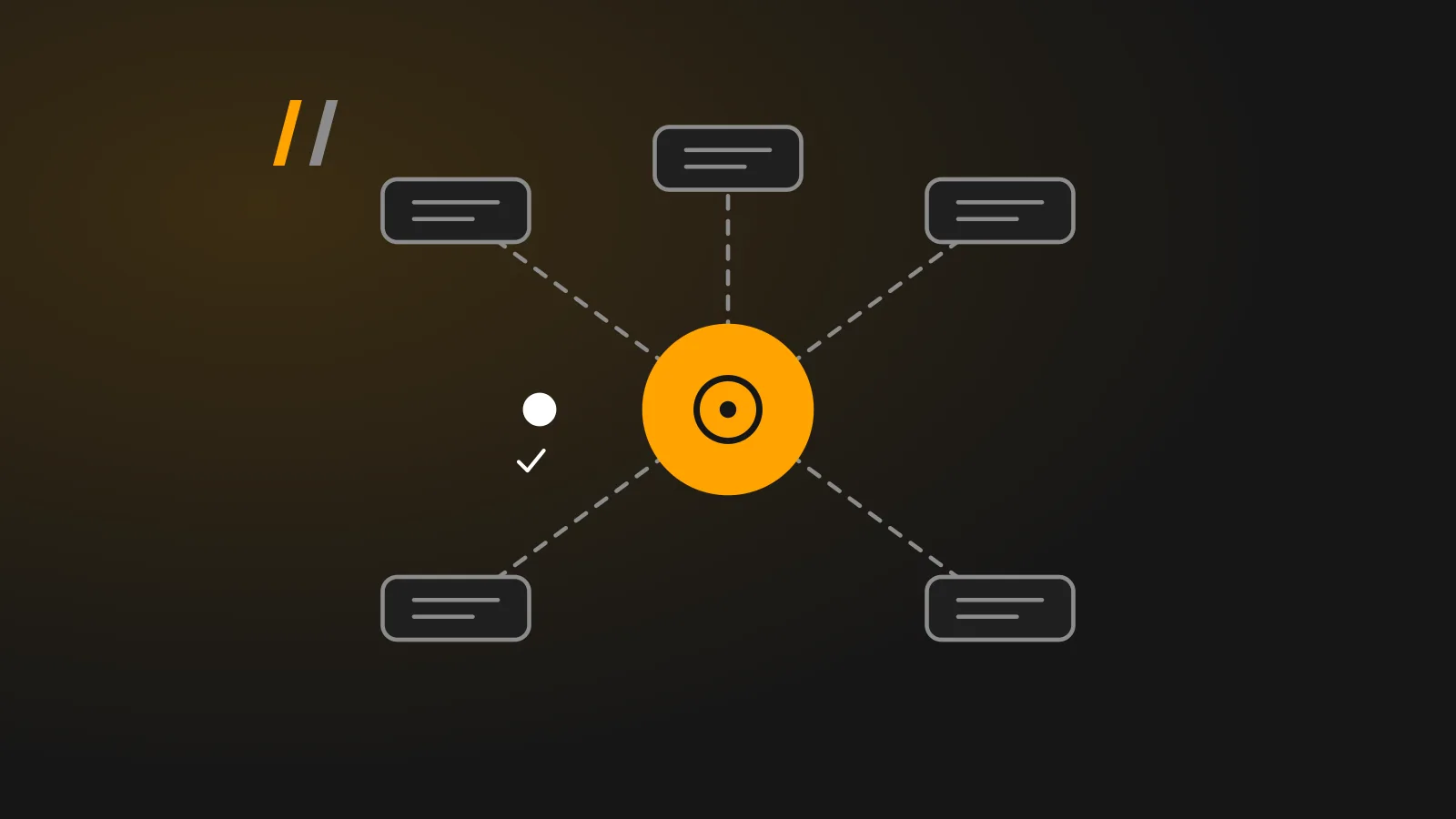
Two years ago an “AI project” meant a chatbot on the website. In 2026 it means an agent that reads an email, checks the order in the ERP, drafts the reply and books the shipment, with a person approving the step that matters. The technology is ready for narrow, well-defined work. It is not ready to run a department. This article explains the difference and how to start without burning a budget.
01What an AI agent actually is
An agent is a language model given three things a chatbot does not have: tools (the ability to call your systems through APIs), a goal that spans several steps, and a loop in which it plans, acts, observes the result and tries again. The Model Context Protocol (MCP) and similar standards made tool access routine in 2025, so an agent can now query an ERP, search a document store or create a ticket without custom glue code for every connection.
That is the whole difference. A chatbot answers. An agent does, and the “doing” is where the business value and the risk both live.
02Where agents deliver today
- Order and invoice handling: reading incoming documents, matching them to purchase orders, flagging exceptions and posting the clean ones.
- First-line support: resolving password, status and “where is my order” requests end to end, escalating the rest with a summary attached.
- Sales operations: enriching leads, drafting follow-ups in the CRM and preparing meeting briefs from past interactions.
- Internal knowledge: answering policy, HR and product questions from your own documents, with the source shown next to the answer.
- Engineering: triaging bugs, writing first-pass tests and updating documentation under human review.
The pattern is the same in every case: high volume, clear rules, data available through an API, and a cheap way for a human to check the result.
03Where agents still fail
Agents fail when the goal is vague, the data is inconsistent or the cost of a wrong action is high. “Optimise our pricing” is not a task for an agent in 2026. “Flag every quote more than 15% below list price and draft an explanation for the sales manager” is.
They also fail silently when nobody measures them. An agent that resolves 60% of tickets correctly and quietly mishandles the other 40% is worse than no agent. Every production agent needs an evaluation set, a dashboard and a person who owns the number.
Start with the task your team would gladly give away, not the one that would make a good press release.
04A realistic roadmap for a mid-size company
- Quarter one: pick one workflow, build a proof of concept on real data, measure accuracy against a test set of 100 to 300 cases.
- Quarter two: move it to production with approval steps, logging and a rollback switch. Train the team that works next to it.
- Quarter three: remove approval steps where the measured error rate justifies it. Add the second workflow.
- Quarter four: review cost per task, model choices and vendor lock-in. Decide what to scale in 2027.
05What to prepare before any agent project
- APIs or exports for the systems the agent must touch. If the ERP has neither, start there.
- A data map: what the agent may read, what it may write, and what must never leave your region.
- A named owner for each workflow who signs off accuracy before go-live.
- A budget line for inference costs. Agents call models many times per task; the bill is predictable only if you measure it.
06What to leave for 2027
Multi-agent systems that negotiate with each other, agents with their own budgets, and fully unattended processes with financial consequences. The tooling is maturing fast, but the governance frameworks and the audit expectations of regulators are not yet settled. Build the single-agent foundations now so those options are available when they are.
07How Synova helps
Our AI Integration team ranks your use cases, builds the proof of concept on your data and integrates it with your ERP, CRM and help desk. Every delivery ships with an evaluation set and a dashboard, and our engineers in Ho Chi Minh City keep improving it after launch.
Frequently asked questions
What is the difference between an AI agent and a chatbot?
A chatbot answers questions in a conversation. An agent pursues a multi-step goal by calling tools such as your ERP, CRM or help desk, observing results and continuing until the task is done, usually with a human approving the critical step.
Which business processes are ready for AI agents in 2026?
Document handling (invoices, claims, contracts), first-line customer support, sales operations and internal knowledge search. They share high volume, clear rules, accessible data and a cheap way to check results.
How much does a first AI agent project cost?
A proof of concept on real data typically fits the 10k–50k USD band and takes two to six weeks. Production integration with monitoring and access control is a second, larger phase.